Culture Sounds
Culture Sounds is our partnership project working with displaced children and young people in the UK care system.
What We Wanted to Achieve
The Roots of Culture Sounds
This story began in 2019 with a partnership project Destinies. It taught us a huge amount about the challenges and barriers that care-experienced children face and through working with Derbyshire Virtual School and Sinfonia Viva in Culture Café Makes Music, we could see that the music sessions were having a positive impact. It wasn’t until we had the chance to delve deeper though, that we learnt quite how much potential music as an artform could contribute towards health and well-being, specifically helping to regulate the body and mind.
Culture Sounds was the beginning of a learning curve that taught us about the challenges and barriers that care-experienced children face, and how music can positively impact their lives. The programme was part of an Action-Research initiative led by Arts Connect and The Mighty Creatives with the aim of deepening our understanding of the positive impact creative arts projects can have in the lives of these children by addressing the specific barriers they may face. During initial sessions, participating musicians expressed a strong desire to develop their skills when working with participants who have experienced trauma. This prompted us to also further explore how music can foster togetherness, belonging, and well-being among these children.
Our core research question focused on how and to what extent music helps vulnerable, displaced young people feel a sense of belonging, purpose, and safety. To address this, we set out to understand the lived experiences of displaced minors, learn about trauma and its long-lasting effects, and develop inclusive, trauma-attuned approaches to music-making.
What We Did
Training with One World Orchestra (March-May 2026)
This year, we built on what we learned with Sinfonia Viva’s musicians by focusing on trauma-attuned methods. The programme comprised two days of intensive training with One World Orchestra (OWO), who brought extensive expertise blending music therapy, theatre practice, and socially engaged art.
Led by Darren Abrahams (OWO’s Co-Founder), alongside professional musicians with lived experience of displacement, trauma specialists, and experienced educators, the training was structured in two parts:
Day 1: Understanding Trauma. Three Sinfonia Viva musicians (playing double bass, flute, and trumpet) and other sector professionals explored the biological, psychological, and social impacts of trauma. Held in a safe, welcoming environment, this introductory day used a gentle, holistic approach, giving practitioners time to absorb, digest, and reflect on how to adapt their musical practice to the care environment.
Day 2: Practical Application & Readiness. The second day focused on putting trauma-attuned principles into practice and preparing the musicians for the workshops ahead. Through practical exploration, they considered how attentive listening, flexibility, and non-verbal communication could help create a safe and responsive space for young people.
Workshops with One World Orchestra (OWO) and Sinfonia Viva (May 2026)
We came together with OWO and Sinfonia Viva musicians to deliver two days of workshops at a young people's home in Leicester. The sessions were co-designed with support workers, who were instrumental allies – not only by opening their doors, but by helping shape a format tailored to the young people's daily environment.
Musicians, young people, support workers, and lead artists created a space where everyone could explore and put their learnings into practice together. The focus was not on reaching a predetermined outcome, but on creating the conditions for meaningful interactions, relationships, and creativity to emerge.
In keeping with a trauma-attuned approach, the workshops did not follow a rigid, linear schedule. Instead, they were attuned to what emerged in the space – allowing music, body language, storytelling, sharing, and mutual learning to unfold at a pace chosen by the young people themselves. For the musicians, this required shifting away from traditional instruction to focus on positionality, attentive presence, and communicating beyond words.
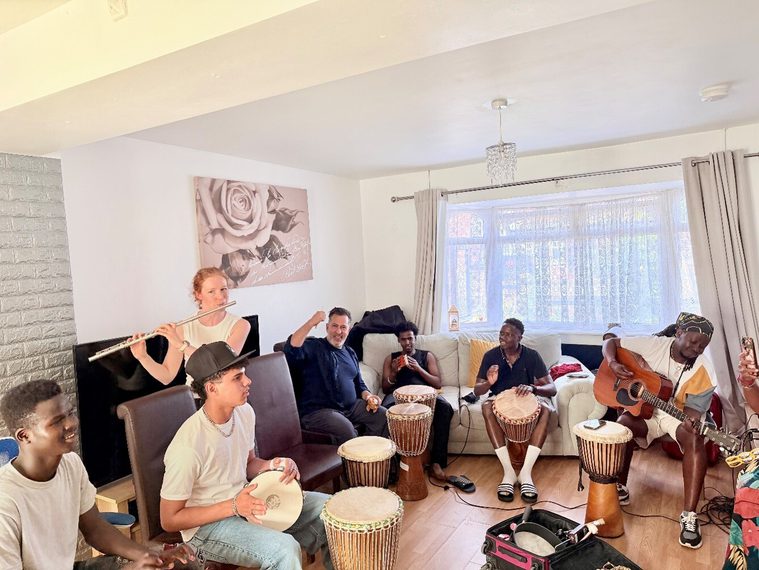
Listening, in fact, became one of the defining features of the first day. Listening to young people's musical influences and memories, listening to rhythms emerging through spontaneous drumming and jamming, and finding ways to weave those sounds together with the double bass, flute, and trumpet. Alongside this, Darren and the supporting One World Orchestra Music Leader, Zangi ,carefully set up the room with drums and a mobile recording station, creating a gentle invitation into the creative process rather than directing it. From the moment we stepped into the house, the young people and their support workers gathered around us with a sense of curiosity and excitement, setting the tone for what would become two days of shared exploration.
On the first day, the group consisted of five young people, each from different countries and bringing distinct musical influences, memories, and cultural references into the room. Among them were two young people who had taken part in the project the previous year. It was particularly moving to see how that initial experience had remained with them throughout the year and how much enthusiasm and commitment they brought to this new chapter of the project.
One young person, in particular, embodied this sense of continuity and growth. During the previous project, he had been quite shy and primarily engaged through movement rather than instrumental music-making. This year, however, he blossomed with confidence, sharing his love of singing and rapping openly and enthusiastically. Whether during structured moments or in-between conversations, he was constantly rehearsing, singing, and experimenting with his voice, revealing a confidence that had quietly developed over time.
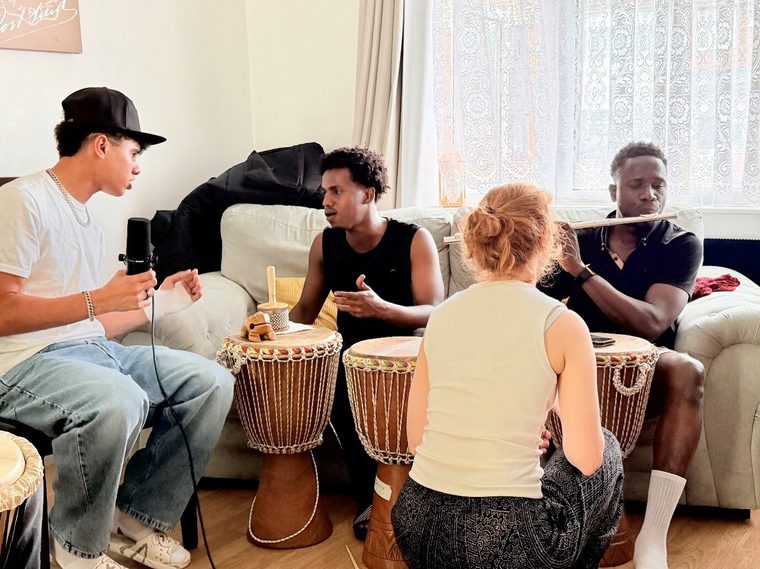
As the days unfolded, the workshops gradually took shape through the energy, interests, and contributions of everyone in the room. Through attentive listening, imagining together, observing, and simply being present, relationships began to form and deepen. Waiting and adjusting to the pace of the contributions young people wanted to offer became a central practice, allowing participation to emerge naturally rather than being requested or expected.
Although this way of working initially felt unfamiliar and, at times, unsettling, particularly for musicians used to more structured forms of delivery, it ultimately revealed itself as one of the project's greatest strengths. By slowing down and creating space for observation and responsiveness, everyone in the room was able to adapt to one another with greater harmony, trust, and reciprocity.
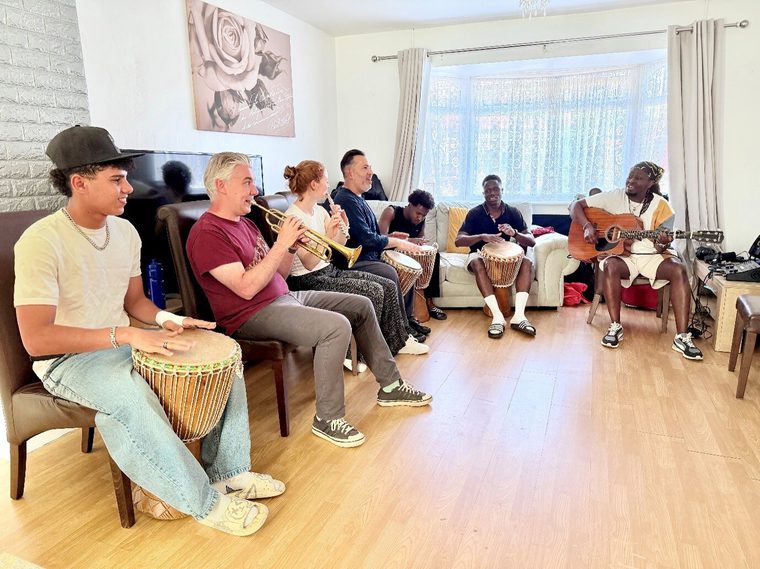
From this shared attentiveness emerged an unexpected and exciting amalgamation of sounds, genres, and musical influences. Musical ideas surfaced through spontaneous drumming, singing, conversations about favourite artists, and moments of playful experimentation. By listening carefully to these offerings and treating them as valuable creative material, the group gradually shaped a final co-composition that reflected the unique combination of interests, talents, experiences, and identities present in the room.
Once done, we were fortunate to have been invited to celebrate EID at County Hall, where we met other young people in the care of Leicestershire Virtual School. That afternoon we played football, ate together and finally, we were able to share the music which had been made. It felt very special that the participants were confident and proud to play their music, as well as invite others to join in.
Perhaps the most significant outcome of the two days was not the final piece itself but what it represented. Alongside the growth in young people's confidence and trust, there was also a growing sense that learning was happening in every direction. Musicians learned from young people, support workers learned alongside musicians, and young people discovered new things about themselves and each other. The space became one in which creativity and belonging transcended traditional roles and expectations.
What emerged was more than a music project; it was a space shaped by, for, and with young people's voices, where creativity became a vehicle for connection, trust, and collective discovery.