BLOG: At Home: How Little Things Reveal the Biggest Impact
NewsNews Story
Claire Henderson, our Community Impact Coordinator - North, on how the little things often reveal the biggest impact.
Our At Home project with Manchester Camerata is part of our wider Classically Yours intergenerational partnership programme, which brings orchestral music to geographically dispersed communities in East Yorkshire. This is an area of England which has historically low levels of cultural engagement.
We've worked for over a decade with our long-standing local partner, East Riding of Yorkshire Council, in care homes across the coastal areas of Hornsea and Withernsea. Together with our orchestral partner, Manchester Camerata, the At Home project was conceived to deliver a range of health and wellbeing music sessions directly to residents in their care homes.
These sessions have been specifically designed with the research-backed Music in Mind approach to musical presence and connection. This approach is an evidence-based dementia care and wellbeing programme developed by Manchester Camerata in partnership with the University of Manchester. It is the foundation of the UK's first Centre of Excellence for Music and Dementia.
The Power of Seeing Engagement First‑Hand
As a Community Impact Coordinator at Orchestras Live, my role is to understand how our partnership work is actually received and impacts the local communities we work with. Being present in care homes for At Home gave me the chance to see this first‑hand, not just through the usual collection of survey data or attendance figures, but through the small, human moments during the sessions that show how people are able to connect through music.
Attending live delivery means observing how everything lands and feels in the room: what captures attention, what lifts mood, and how people respond when music becomes a shared experience.
I see faces light up, care staff snapping photos of residents playing alongside professional musicians, and moments of connection that statistics alone can never capture.
Every Response Tells a Story
Care staff spend up to 12 hours a day with their residents. They know them inside out and were able to point out to me behavioural signs that signal relaxation, enjoyment and engagement. I was amazed by the care staff’s attentiveness to these small moments, from a hand unclenching to tears emerging when the music stops, because they have such an emotional response to melody.
Attending these sessions and a finale performance in each care home, I gained a huge understanding of the true value of this work. Some residents danced or sang along with the music leader; others with more limited movement extended or retracted their hands in subtle gestures. These signs whether large or little, showed how music can make people feel connected and the pure enjoyment the residents got from the music they created with the music practitioners.
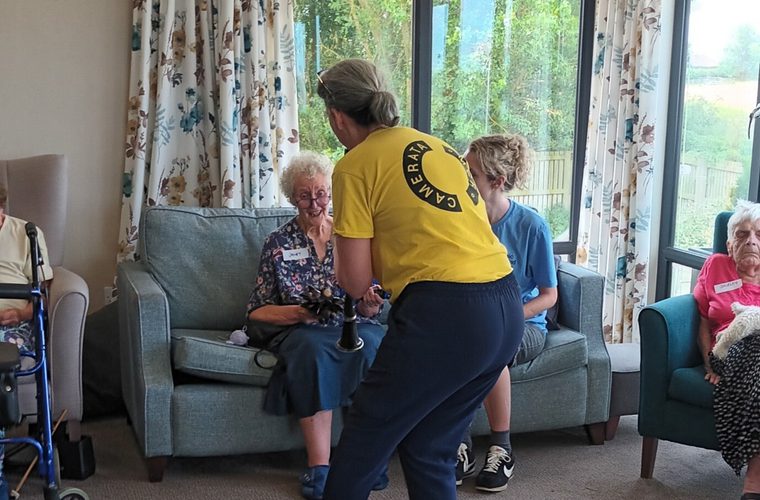
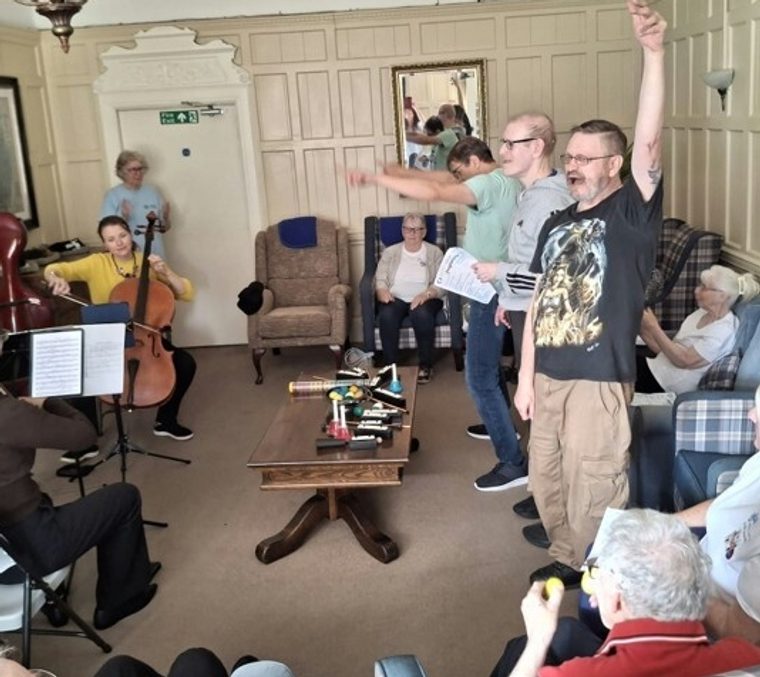
The project culminated with a visit from a Manchester Camerata string quartet playing directly in residents’ homes. The programme responded to participants musical interests, featuring everything from classical string quartets to popular songs and music from movies. Each setting had unique responses from the audience from tapping along eyes closed to small movements, to dancing and some enthusiastic singing. In one memorable moment, a resident belted along to “You ain’t nothing but a hound dog!”
For me, the relaxed nature of the whole performance highlighted the importance of professional musicians being physically present in care settings. Residents and care staff alike getting a close up look at the instruments and experiencing a live sound that can’t be matched by listening to the radio.
As a Community Impact Coordinator, At Home has reminded me that impact is not always big and loud. Sometimes engagement looks like a smile, a tapping foot, hands clasped onto an egg shaker, or a resident singing along without hesitation.
Music in Mind: Responding to the Room
Manchester Camerata’s Music in Mind practice is designed to be extremely sensitive to the room and incorporate residents’ responses small or large by changing tempo, introducing new instruments and mirroring what is happening in the room. The music never stops during the whole session, but rather shrinks softer, grows louder and changes direction completely based on what the residents offer up.
For care staff, sessions provide musical respite to their own busy and often routine working day.
Feedback tells us the visits also shift their perceptions of what people are capable of and creates opportunities for better connection with residents that may not arise in daily care routines.
Volunteers Who Keep Coming Back
Another crucial element to At Home is the support of volunteers from local amateur choirs. United through the Classically Yours annual celebration concert, choir members who volunteer in the care home tell us how they see the importance of music for personal health and wellbeing. They lend their voices, musical ears, community connection and generous hearts to work side by side with Manchester Camerata practitioners during these visits to care homes.
These volunteers attend session after session because they believe in the value of this work and see its impact. Over time, they have built trusting relationships with residents and practitioners. Anyone who experiences these sessions can see the sparks of creativity and moments of genuine connection that emerge between people of all abilities.
What Engagement Really Looks Like
As a Community Impact Coordinator, At Home has reminded me that impact is not always big and loud. Sometimes engagement looks like a smile, a tapping foot, hands clasped onto an egg shaker, or a resident singing along without hesitation. These small moments tell a powerful story about the role music can play in connection, wellbeing and contributing to a good life.
We are planning to continue delivering At Home as part of our Classically Yours intergenerational programme due to its success. We're exploring ways we can extend and deepen the programme through additional training for our next cycle.